
By the Breth Sleep and Breathing Team · Updated October 2026
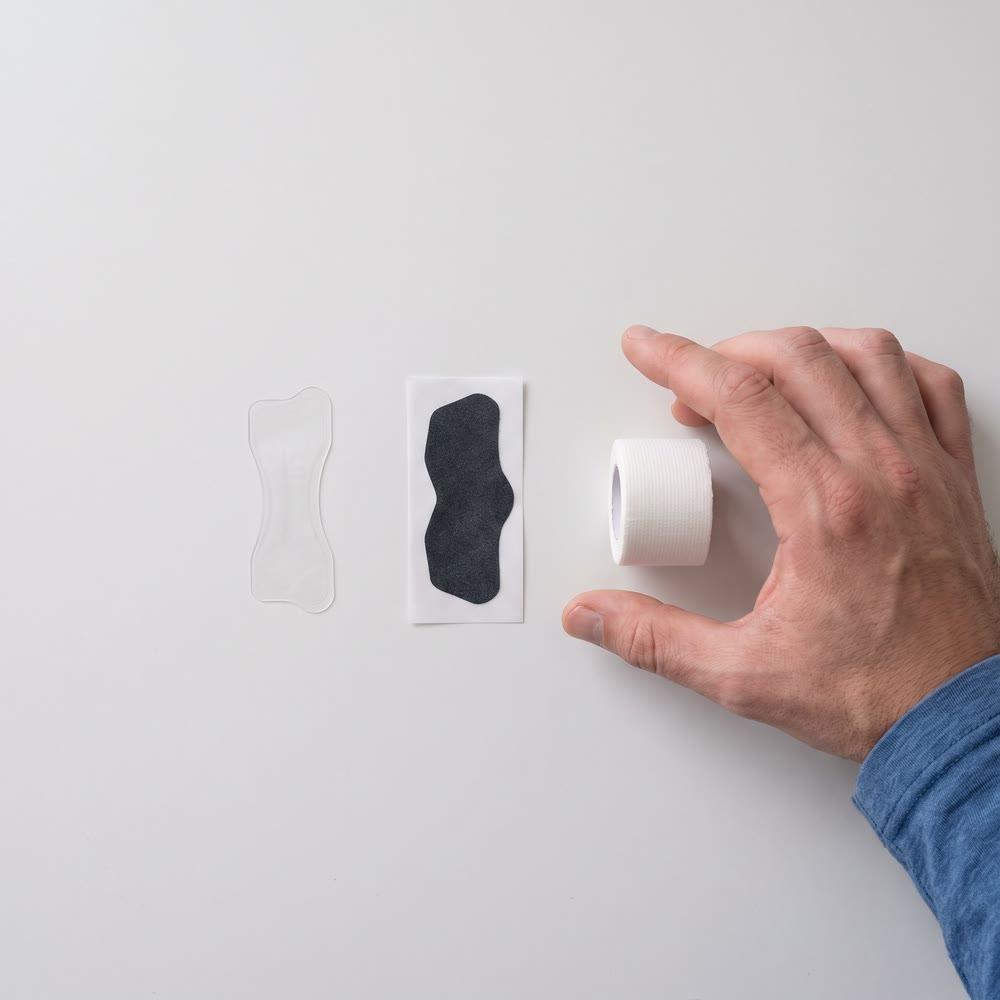
Short answer: "nose strips" covers three products, and none replaces another. Breathing strips stick outside the nose and help open your nasal airway while worn. Blackhead strips go on wet skin and peel off surface pore plugs. Post-surgery tape is medical tape used after nose surgery, only as the surgeon directs. This article is information, not a diagnosis.
Key takeaways
- A blackhead strip won't help you breathe, and a breathing strip won't lift blackheads.
- No strip permanently shrinks or enlarges the nose.
- After nose surgery, use no strip unless the surgeon agrees.
What's the difference between the types of nose strips?
- Breathing strip: a springy band stuck outside the lower nose, worn at night or for sport. For adults.
- Blackhead strip: goes on wet skin, hardens, then peels off. Skincare.
- Post-surgery tape: medical paper tape the surgeon applies or prescribes, for weeks or months.
How do breathing strips work, and do they help?
A breathing strip is an external dilator with no medicine: its springy layer tries to straighten, which helps open your nasal airway while worn. In a small study of 25 healthy adults, a strip widened the narrowest point at the front of the nose by about 17%, measured as airway area, not airflow. A review found 5 studies supporting external strips.
Limits: the effect is at the front of the nose only, and people whose blockage came from swelling inside felt no clear difference. Two reviews found strips don't improve sleep apnoea or the measured snoring index. The UK's NHS lists them as an option when snoring comes from narrow nasal passages. See do nasal strips work for snoring?
How do you put on a breathing strip, and how long can it stay?
- Clean, dry skin, with no cream or oil.
- Place it on the soft part of the nose, just above where it flares out at the nostrils.
- Press for a few seconds.
- One strip per night; wear time as the pack says.
- Wet it with warm water and peel it off slowly.
- Not over cuts, sunburn or irritated skin; stop if redness, itching, rash, swelling, pain, peeling or bleeding appears.
- If the pack lists latex, or adhesives have irritated you before, don't use it.
Step by step: how to use nasal strips.
What do blackhead strips actually remove?
Blackheads are open pores plugged with oil and dead skin; the dark colour comes from light reflection, not dirt. A charcoal or Korean pore strip goes on wet skin, hardens, then peels off with the surface plug only, and blackheads usually come back. No studies show they help acne. Don't squeeze blackheads: it can push them deeper or cause inflammation or scarring.
Are blackhead strips harmful, and how often can you use them?
Not usually when used sparingly, but the adhesive can irritate skin.
- No more than once every 3 days.
- Not on broken, sunburned, irritated or inflamed skin.
- Using a strong prescribed acne treatment? Ask your doctor first.
- Itching, blisters, or dry, cracked skin within hours or days: stop and ask a pharmacist.
- Blackheads keep coming back? A pharmacist or dermatologist may suggest a topical treatment.
What is post-surgery nose tape, and how long is it used?
After nose reshaping, a splint is taped on for about 7 days; bruising and swelling can last 3 weeks, and swelling up to 6 months. Some surgeons then prescribe paper tape for weeks or months; in a trial of 57 patients, 4 weeks of taping reduced swelling above the tip in some. How and how long is the surgeon's call, not an internet method. Don't blow your nose or pick crusts until the splint is off, and avoid strenuous or contact sport for 4 to 6 weeks.
Can nose strips make your nose smaller or bigger?
No type permanently changes nose size. Post-surgery tape can look slimmer while swelling settles, "nose-slimming strips" have no evidence, and breathing strips don't reshape the nose. See do nasal strips enlarge the nose?
Which nose strip do you need?
- A narrow nose at the front at night, and you want to breathe through it more easily: a breathing strip.
- Blackheads: a blackhead strip, in moderation.
- After nose surgery: only the tape your surgeon specifies.
In the pharmacy, the box tells you:
- "Breathing" or "snoring": a breathing strip.
- "Pores" or "charcoal": a blackhead strip.
- "Surgical paper tape", sold as a roll: post-surgery tape.
Breth nasal strips are breathing strips, not blackhead strips or post-surgery tape. They aren't a medicine; they help open your nasal airway while worn, and they're for adults. To compare, read the best nasal strips for snoring in Saudi Arabia and nasal strips vs spray vs dilators.
When should you see a doctor instead of trying another strip?
- Snoring with breathing pauses, gasping, daytime sleepiness, morning headaches or poor focus: possible sleep apnoea. See a doctor, and don't drive drowsy.
- A blockage that keeps getting worse, makes breathing difficult, or changes your sense of smell: see a doctor; a strip can hide it.
- After nose surgery: severe pain, heavy bleeding, difficulty breathing or any unexpected symptom: call the clinic straight away, or 997 if severe.
- A rash, redness or pain under post-surgery tape: stop and see the doctor.
- Skin irritation that stays after you stop using the strip: see a pharmacist or doctor.
- Deep, painful or scarring spots, hot swollen red skin, or acne affecting your mood: see a doctor.
- Children: breathing strips aren't for young children; ask the paediatrician before any strip. A child who snores needs assessment, not a strip. See snoring in children.
For advice, call 937 (Ministry of Health), 24/7.
FAQ
Can a blackhead strip help me breathe at night?
No, it only works on the skin.
Can I wear a breathing strip after nose surgery?
Not unless your surgeon agrees.
Do breathing strips help sleep apnoea?
No. Studies found no difference, and sleep apnoea needs a doctor.