
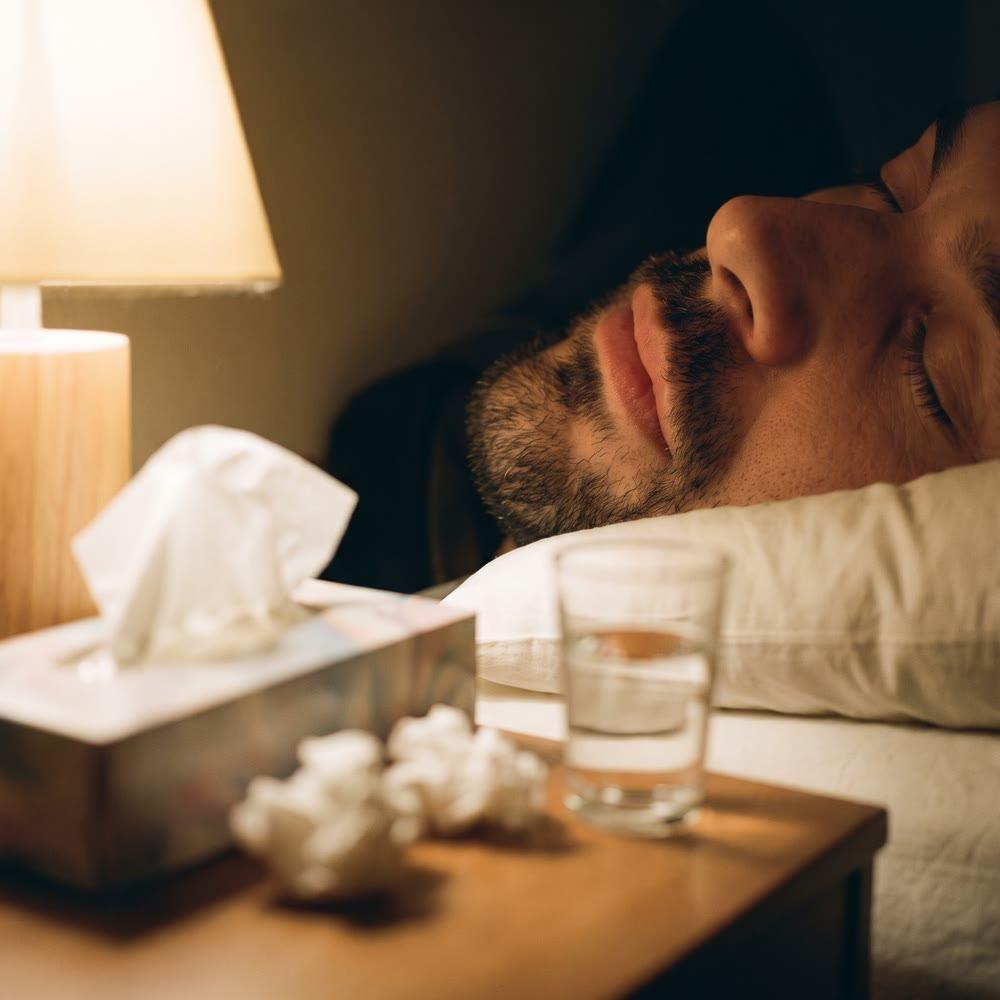
By the Breth Sleep and Breathing Team · Updated October 2026
Short answer: Sudden snoring usually has a temporary cause, most often a blocked nose from a cold, allergy or sinusitis: pulling air through a stuffy nose takes extra effort and airway tissues vibrate. It usually eases as your nose clears. See a doctor if it persists or comes with breathing pauses, gasping or daytime sleepiness. This article is information, not a diagnosis.
Key takeaways
- New snoring means something changed: a cold, allergy, dust, a medicine, weight.
- Pauses, gasping or daytime sleepiness: see a doctor; don't blame the cold.
- There's no pill for snoring itself; the cause is what gets treated.
What causes sudden snoring?
Snoring is the tongue, mouth, throat or nasal airways vibrating as you breathe. If it starts suddenly, something new has probably narrowed the airway. Ask what changed:
- A cold, allergy or sinusitis.
- Dust or a dust storm.
- A sleeping pill or a new drowsy medicine.
- Weight gain, especially around the neck.
- Sleeping on your back, or pregnancy.
Nearly half of adults snore, but new snoring is worth finding the cause of.
Why does a cold make you snore?
A blocked nose makes you pull air harder, and snoring may happen only with a cold or sinus infection. Cold symptoms build over 2 to 3 days and usually improve in 1 to 2 weeks, so snoring usually eases as your nose clears.
Can allergies or dust make you snore suddenly?
Nasal allergy causes sneezing, itching and a blocked or runny nose. Pollen, dust mites or pet dander trigger it, and snoring may happen only in allergy season. In Saudi Arabia, dust and the allergy months make it worse; see nasal allergy season in Saudi Arabia. See a doctor if symptoms affect sleep or daily life, pharmacy treatments don't work, symptoms worsen, or asthma gets worse.
Could it be sinusitis?
Sinusitis can make you snore at night and sound nasal, and usually clears within 4 weeks. See a doctor for severe headache or facial pain, if it's not better after 3 weeks of self-care or a week of pharmacy treatment, or if it keeps coming back.
What else causes loud snoring?
Sleeping pills and drowsy medicines, weight gain especially around the neck, back sleeping, smoking, pregnancy, menopause, age over 50, a deviated septum, nasal polyps and large tonsils. New snoring in pregnancy is worth mentioning to your doctor. See 7 habits that worsen snoring.
How do you ease snoring tonight with a blocked nose?
For the full night routine, see how to sleep with a blocked nose. For the snoring:
- Side sleeping: a tennis ball sewn into your pyjama back, a pillow or a wedge.
- Raise the head of the bed: firm blocks under the two head-end legs, or a wedge; pillows alone aren't enough.
- Sleeping pills and drowsy medicines: avoid them before bed; don't stop a prescribed one without your doctor, but ask if it's behind the snoring.
- Nasal strips and dilators: an option for a narrow or blocked nose. A strip is a springy band with no medicine, stuck outside the nose just above the nostrils; as it tries to straighten, it helps open your nasal airway while it's on.
Breth nasal strips aren't a medicine and don't ease the cold, allergy or swelling inside your nose, but they help with snoring that starts in the nose, and they're no fix for sleep apnea. See when nasal strips don't help.
Is there a medicine for snoring?
There's no pill for snoring itself; the cause is treated, and a pharmacist or doctor decides.
- Options for the blocked nose: antihistamines, steroid nasal sprays, saline spray and decongestant sprays.
- Antihistamines: some make you drowsy, so don't drive after them; let the pharmacist choose.
- Decongestant spray: follow the leaflet, usually no more than 3 days and never over 5 in a row, as longer use can bring the blockage back worse. Not for children under 6; in pregnancy only if a doctor says so. Ask a pharmacist first if you have high blood pressure, diabetes, heart, thyroid or prostate problems or glaucoma, or take antidepressants or other medicines.
- Children: no cough or cold medicines under 6.
When is sudden snoring dangerous?
Sleep apnea signs: breathing that stops and starts, gasping or choking, heavy daytime sleepiness, morning headaches, very loud nightly snoring, or high blood pressure. Apnea pauses last over 10 seconds. Untreated, it's linked to high blood pressure, stroke, diabetes, heart disease and accidents from sleepiness. Take whoever has watched you sleep to the appointment; you may need a sleep study. Don't drive when very sleepy, and if a doctor confirms apnea, not until it's controlled.
When should you see a doctor about the cold?
See a doctor if: the cold isn't better after 10 days, worsens, or improves then worsens; you're short of breath, have chest pain, or breathe fast or with difficulty; a high temperature or shivering; fever over 3 days; a cough past 3 weeks; dehydration; a worsening long-term condition or weak immunity; snoring that outlasts the cold; or a nose that stays blocked or a changed sense of smell. A child who keeps snoring after the cold clears, or with pauses, gasping or laboured breathing, needs a doctor, as does a child 11 or under with sinus symptoms; see snoring in children.
Same day, if you have sinusitis and: you feel very unwell, painkillers aren't helping, symptoms are getting worse, you have weak immunity, or it's a child under 5.
Emergency, call 997: severe breathing difficulty, a tight or heavy chest, pain spreading to the arm, back, neck or jaw, blue or grey lips or skin, sudden confusion, or with sinusitis: vision changes, swelling around the eye, a stiff neck, a seizure or a very high temperature.
For advice, call 937 (Ministry of Health), 24/7.
FAQ
Does snoring from a cold go away on its own?
It usually eases as your nose clears; if it continues after the cold, see a doctor.
Is sudden loud snoring a sign of sleep apnea?
Not always, but with pauses, gasping or daytime sleepiness, see a doctor.