
By the Breth Sleep and Breathing Team · Updated October 2026
Short answer: the main types of earplugs are soft foam plugs that expand in the ear (for sleep, noise and travel), reusable pre-formed silicone, moldable, and custom-made plugs. Choose by use: foam for noise; for swimming, a water-labelled type or a swim cap. None blocks all sound. This article is information, not a diagnosis.
Key takeaways
- Earplugs reduce sound; they don't cancel it.
- For swimming, use earplugs labelled for water; never wear earplugs while scuba or deep diving.
- A painful or discharging ear: no earplugs, see a doctor.
What do earplugs do: reduce noise or reduce water getting in?
Two different jobs: reducing noise, or reducing water getting in when swimming. Earplugs reduce sound without cancelling it, and the rating on the box isn't always the protection you actually get, because fit matters.
What types of earplugs are there?
- Foam: roll thin before inserting; it expands in the ear. For sleep, noise and travel.
- Pre-formed silicone: easy in and out, reusable.
- Moldable: silicone or wax; some are sold for swimming, so read the label.
- Custom: made from a mould of your ear; longer-lasting and pricier.
- Alternatives: earmuffs and canal caps.
Earplugs are often more comfortable than earmuffs in the heat, but take practice to fit.
How do you choose the right earplugs?
- Noise and sleep: foam or soft silicone.
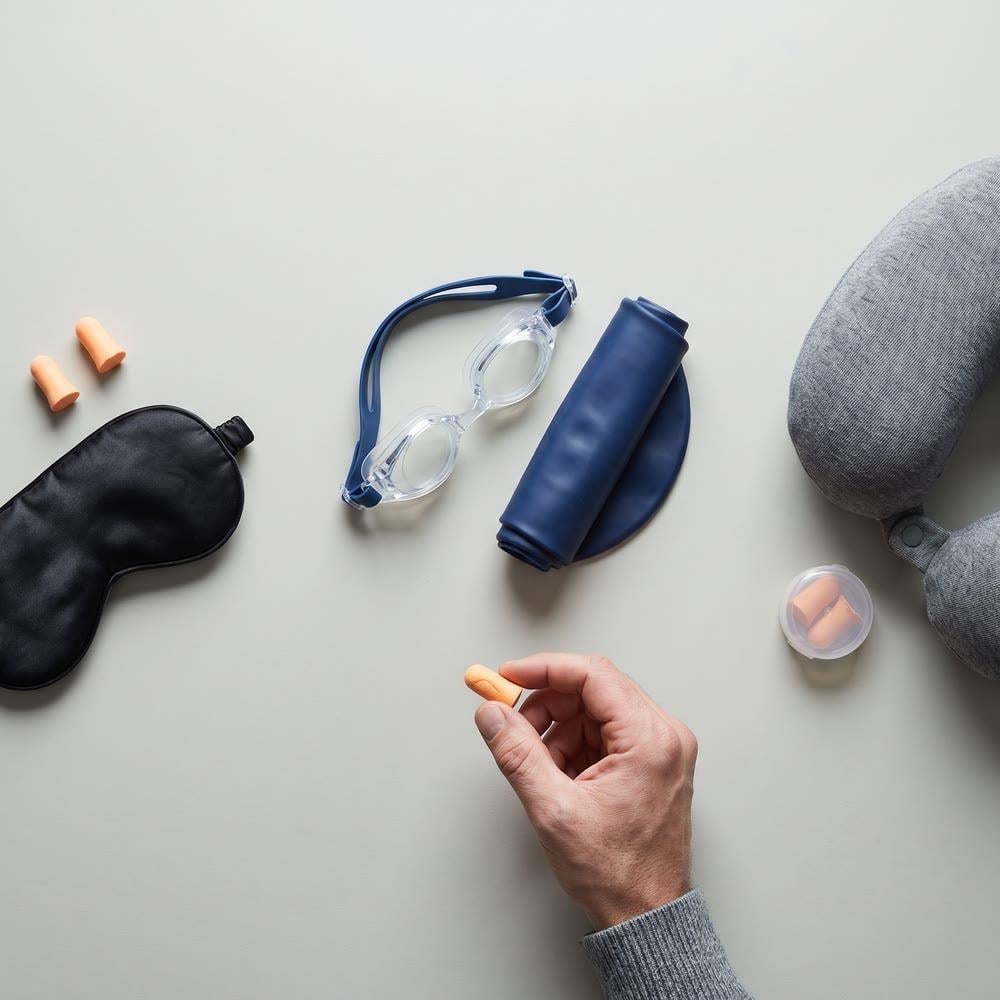
- Swimming and showering: a type labelled for water, or a swim cap over your ears.
- 85 decibels or more: fireworks or power tools need proper hearing protection.
- Daily use: reusable or custom.
Comfort decides whether you keep wearing them; try a few types. If the noise is a snoring partner, see my husband snores and I can't sleep.
Earplugs for swimming: which type, and do children need them?
For swimming, use water-labelled earplugs or a swim cap; in the shower, keep water and shampoo out. Dry your ears well, avoid polluted water, skip cotton buds, and use ear-drying drops only after a doctor or pharmacist, never with ear tubes, a punctured eardrum, infection or discharge. Swimmer's ear (ear-canal inflammation) brings pain that worsens when the ear is pulled, itching, discharge and reduced hearing; if it follows swimming or earplugs, stop the plugs and see a doctor.
- Scuba or deep diving: never wear earplugs; they trap air against the eardrum so pressure can't equalise.
- Children: they get swimmer's ear more often. A child with ear tubes doesn't routinely need earplugs; their doctor decides. Earplugs are small objects, so don't give them to a child without the doctor's advice.
Which earplugs suit sleep?
Foam or soft silicone, by comfort, especially for side sleepers. Sleep evidence comes mostly from intensive care patients and is weak, so we can't promise deeper sleep. Breth earplugs are soft foam; they reduce noise around you without cancelling it. The full guide: earplugs for sleep.
Do earplugs help when travelling and flying?
Plane, hotel and shared-room noise is an earplug job. Ear pain on a plane comes from pressure changes and is worse with a cold or allergy, so avoid flying with a cold or allergy flare if you can, stay awake during descent, and chew gum, yawn or swallow to ease the pressure. No earplug equalises pressure. See sleeping on planes and trips and eye masks for sleep.
How do you put earplugs in correctly?
- Clean hands; roll a foam plug thin.
- Gently pull the top of your ear back and insert without pushing deep into the canal.
- Hold it a few seconds while it expands.
- Check: count aloud while cupping your hands over your ears and lifting them off a few times; if your voice sounds about the same, it fits.
- Clean and dry reusable plugs; bin dirty or damaged ones. Leave earwax alone; it protects the canal.
Are earplugs harmful, and when should you see a doctor?
Earplugs can irritate the canal and cause an outer ear infection, so skip them in a painful, inflamed or discharging ear. If a piece sticks out, remove it by hand or tweezers; otherwise tilt your head to that side. No tweezers or swabs inside the canal, no liquid, no washing, no blocking drainage. If it won't come out, see a doctor; also after removal if pain, ringing, dizziness, hearing loss, blood or discharge follows, or after a recent blow to the ear or head.
Emergency, go to the emergency department or call 997: sudden hearing loss, or an ear that suddenly feels blocked with any drop in hearing (don't blame the earplug and wait), or major hearing loss, ringing or vertigo after a flight or dive. Delay lowers the chance of recovery.
Same-day doctor if ear pain or discharge comes with: feeling unwell, high temperature or shivering, swelling around or pain and redness behind the ear, fluid from the ear, hearing changes, vomiting, dizziness or a severe sore throat; or if you're older or have diabetes, a heart, lung, kidney or neurological condition, or weak immunity, as infection can spread.
See a doctor if earache isn't better after 3 days, infections recur, ear pain after a flight lasts hours, a blocked feeling with normal hearing lasts over 5 days, or an ear is too blocked to hear. Bleeding, discharge or severe pain after a flight or dive: promptly. A baby under 1 with a suspected ear infection needs a doctor, the same day if both ears hurt; any child with ear pain, discharge or hearing change after swimming should see theirs.
For non-urgent advice, call 937 (Ministry of Health), 24/7.
FAQ
Can I use foam sleep earplugs for swimming?
No; foam sleep plugs aren't made for water. Choose earplugs labelled for swimming, or a swim cap.
Is a swimming nose clip the same as an earplug?
No; it's a clip that closes the nose while swimming.
Can I wear earplugs in the shower?
Water-labelled plugs or a cap help keep water and shampoo out of your ears.
Is wearing earplugs to sleep harmful?
They can irritate the canal and cause infection, so keep them clean, bin dirty ones, and skip them when your ear hurts or discharges.